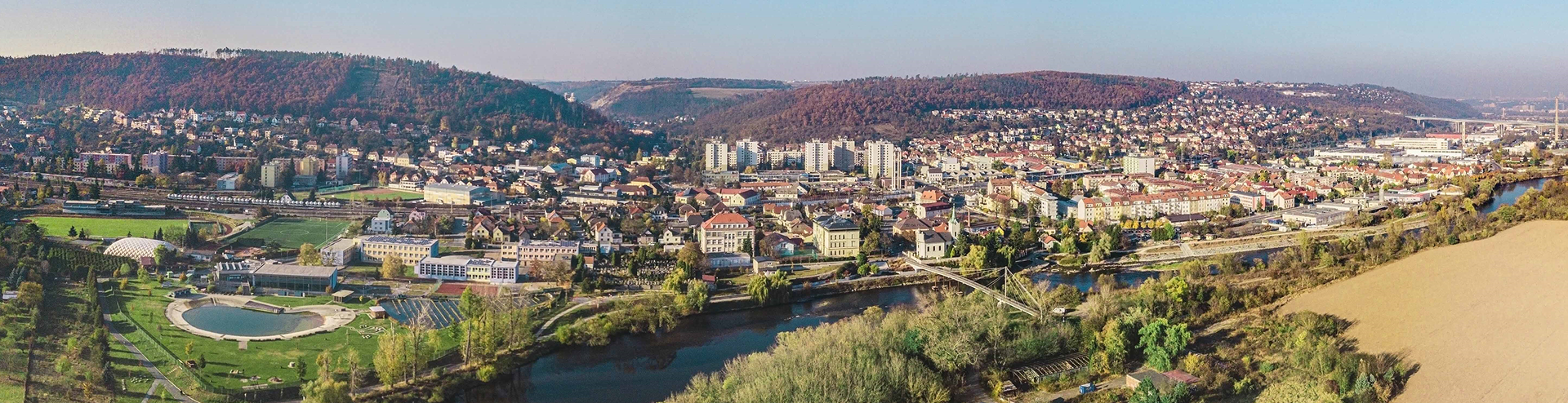
2. Unique Biotope The Cemetery and Notable Figures of Radotín
Unique Biotope
In front of us lies the area of the Radotín biotope. Its main feature is a natural system for keeping the water clean – it uses aquatic plants and natural ecosystems in filtration lagoons. No chemicals are used, which makes this swimming area truly exceptional.
Another unique aspect is that it became the very first recreational biotope in the capital city. When it was completed in June 2014, there were only a few similar places in the entire country. Just a few years earlier, this area was a typical brownfield with an old landfill, a non‑functional wastewater treatment plant, and damaged buildings.
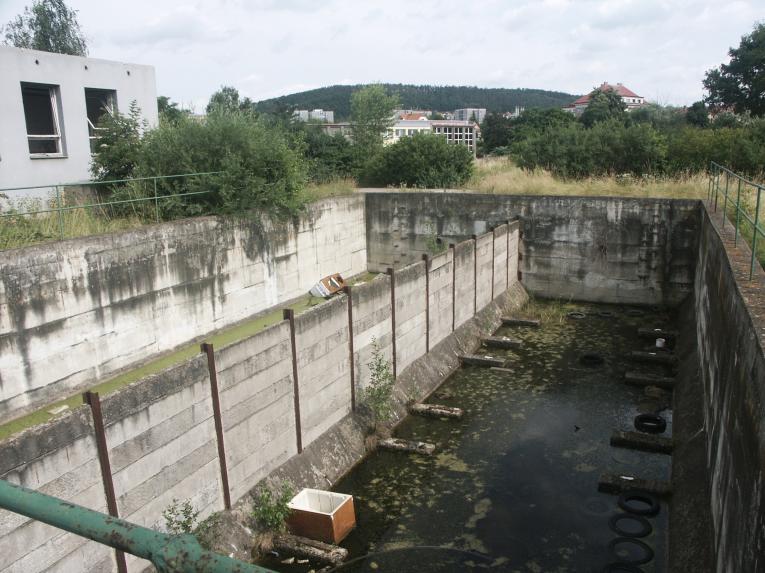
Original appearance of today’s biotope area (2008). Old wastewater treatment plant.
The first revitalisation began after 2006, aiming to remove dangerous structures and old environmental burdens. In 2013, the Prague 16 District managed to start building the new biotope thanks to funding from the City of Prague (65 million CZK).
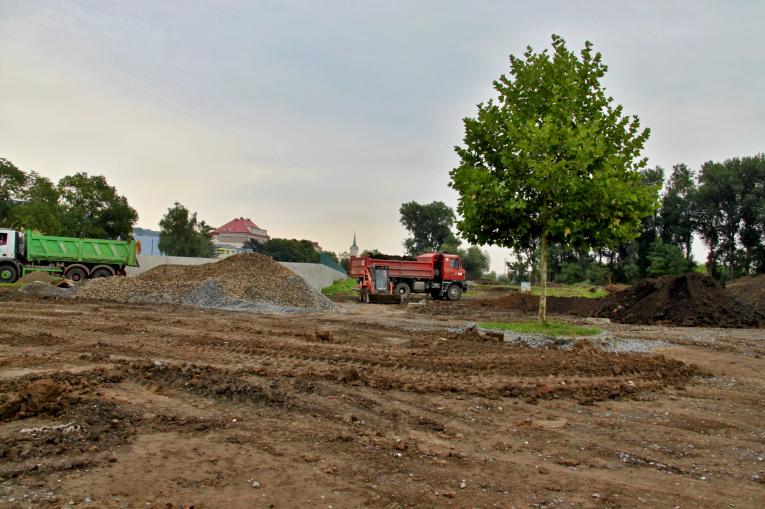
Biotope under construction (2013)

Biotope shortly after completion (June 2014)
A new service building was designed with the goal of adding an indoor swimming pool to the area. This investment of 105 million CZK was completed in 2019. Since then, the pool has been used mainly for extended PE and swimming lessons for pupils of the local primary school.
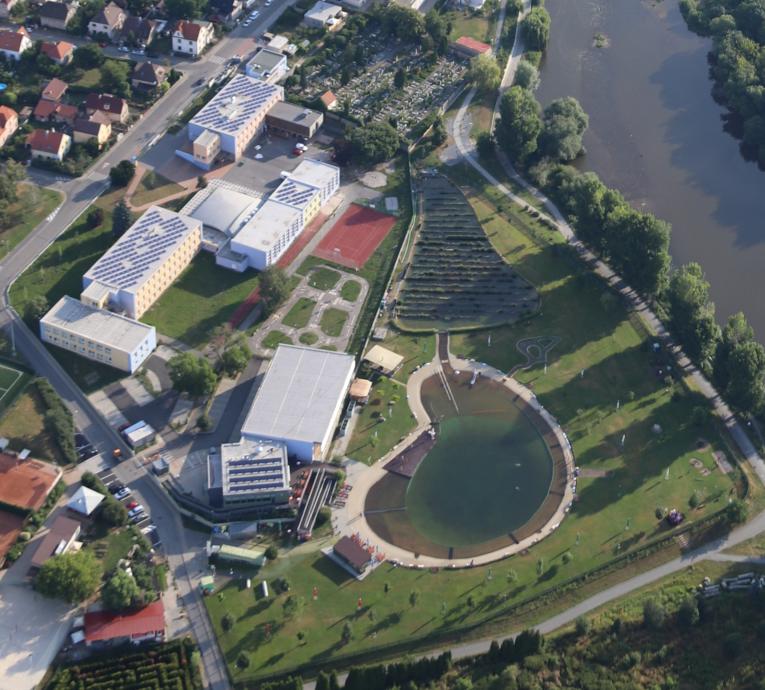
Aerial view of the biotope area
Water for the entire complex is pumped from a well and cleaned by flowing through tanks with more than 6,000 plants (visible in the photo between the cemetery and the main water area). The swimming section reaches a maximum depth of 3.15 metres, holds 4,500 m³ of water, and attracts around 50,000 visitors every year. Together with the indoor pool (the building in the centre), it forms a truly exceptional school and recreational complex.
Website of the Radotín Biotope: https://biotopradotin.cz
Facebook page: Biotop Radotín
Cemetery and Notable Figures of Radotín
The central Radotín cemetery was founded in 1881 as a replacement for the older cemetery that originally surrounded the local church. The part located closer to the river was added in 1940.
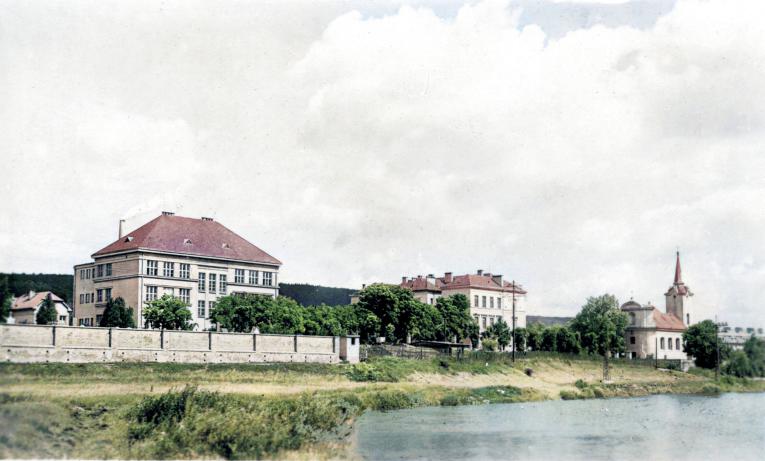
View from the river towards the cemetery in 1940
On the gravestones here, we can find the names of the most important old farming families of Radotín, such as the Nebeský, Drchota, Říha and Ejem families, as well as the entrepreneurial Haman family and the miller families Šarboch and Mašek.
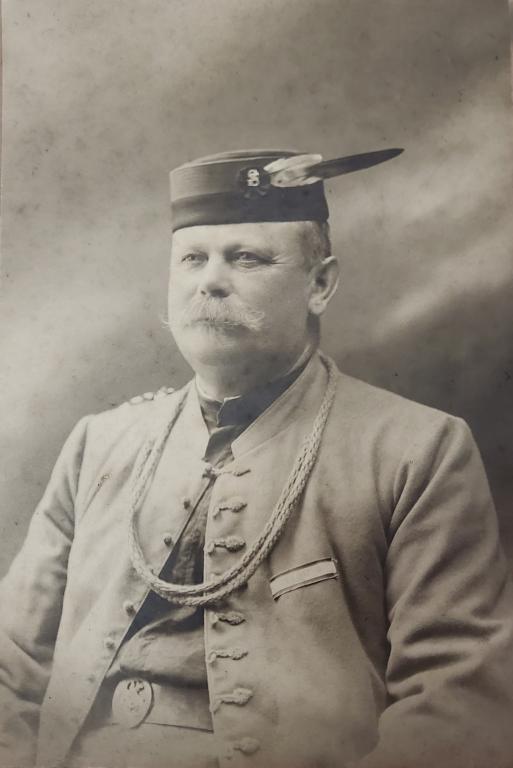
Václav Drchota (mayor 1874–1882) built the inn U České koruny, today’s cultural centre. He donated his barn to the volunteer firefighters, who used it until 2019.
House No. 1 belonged to the Nebeský family, from which Otakar Nebeský (left) came. He was the chairman of the Zbraslav District Committee and a politician of the Agrarian Party.
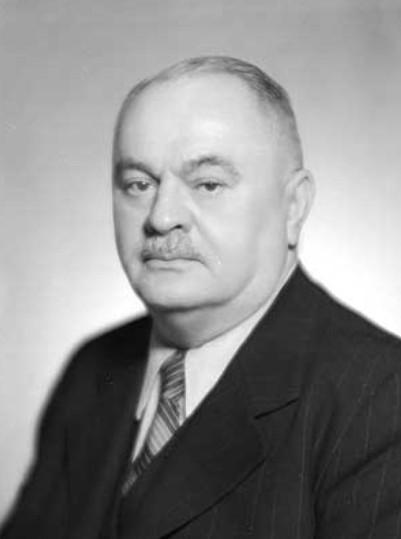 His son Josef Nebeský continued his work. He became an important politician of the Republican Party, but after World War II he was unjustly accused of collaborating with the Nazis and, after a fabricated trial, imprisoned by the communist regime for 12 years.
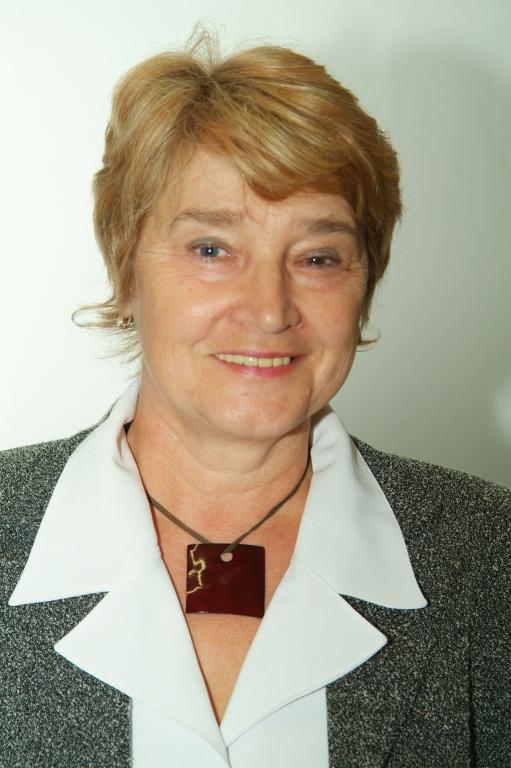 Hana Žižková, a long‑time Radotín local politician from Civic Forum ( OF) and Civic democratic party (ODS), served as mayor of Radotín from 2002 to 2006 and later as Deputy Mayor of the City of Prague.
Also buried here are Václav Schmid, head teacher of the local school from 1874 to 1911; Jaroslav Matějovský, a member of the anti‑Nazi resistance; the popular mayor Hana Žižková; and Milan Peroutka, drummer of the legendary band Olympic. In the lower part of the cemetery lies the grave of three soldiers of the Russian Liberation Army, known as Vlasov’s soldiers.